
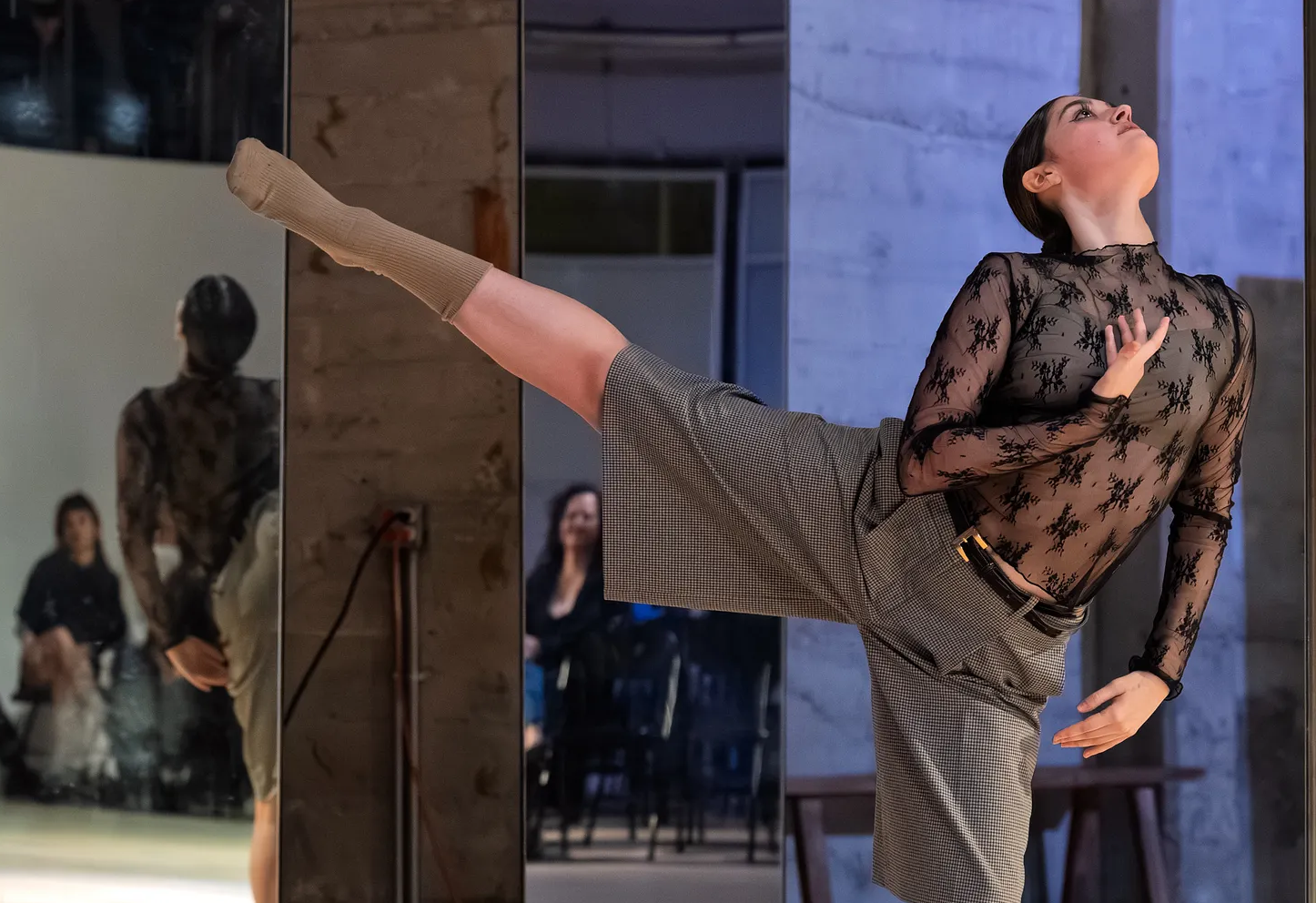
Playground, ttgsf’s first in-studio performance, featuring works by Lines Ballet Training Program alumni and student choreography. Above, ttgsf student Emerson Tait in her solo, ‘Does it feel like you know me now?’ Photo by Steve Disenhof
After fifteen years at the helm of a vibrant dance training program, Karah Abiog has launched her next chapter in exceptional pre-professional dance education with the training ground sf (ttgsf), which opened in September 2025. The Training Ground empowers dancers to move boldly, think critically, and build lasting artistic lives. Through a balance of rigorous work and creative play, dancers are guided to expand their technical range, deepen their artistic voices, and build resilience for a dynamic professional world.
Maurya Kerr
Ms. Karah Abiog! Wanting to check in about this new program, The Training Ground SF, and I would love to start, actually, with a little bit of your dance history. Like when we’re kids, we don’t think our parents have their own lives—I feel it’s a little bit that way now with students and teachers, that they don’t realize the lineage of the people in front of them. So I would love just to hear a bit more about your professional dance journey, then how you transitioned into becoming an educator, and all the great things you’re doing right now.
Karah Abiog
My professional dance journey began soon after I graduated from Loyola Marymount University (LMU) as a dance major, which was life-changing. But my love of dance happened prior to that, which was falling in love with ballet, also knowing the classical ballet journey was not really feasible for me for numerous reasons. This is why we have something like ttgsf or the LINES Ballet Training Program (LBTP), because when you’re aware of those things, you find or create your niche.
mk
What were you aware of?
ka
Body. It was a wake-up call when puberty hit and my body changed. I developed breasts, thighs, and was muscular. Technically, I think that I was really good and had good training. I trained every day after school under Elizabeth Neumann and Karen Millar at a studio called Ballet Capriole in Saratoga. I was part of a motley crew of well-trained dancers that included a Chinese-American girl, a Mexican-Jewish girl, a very robust girl who was such a beautiful technician, and me, being Filipino and Black. And I didn’t realize this at the time because my parents didn’t raise us to think that the color of our skin was a thing… until it was a thing. But I found that the way that dance made me feel—ballet particularly—just felt so liberating
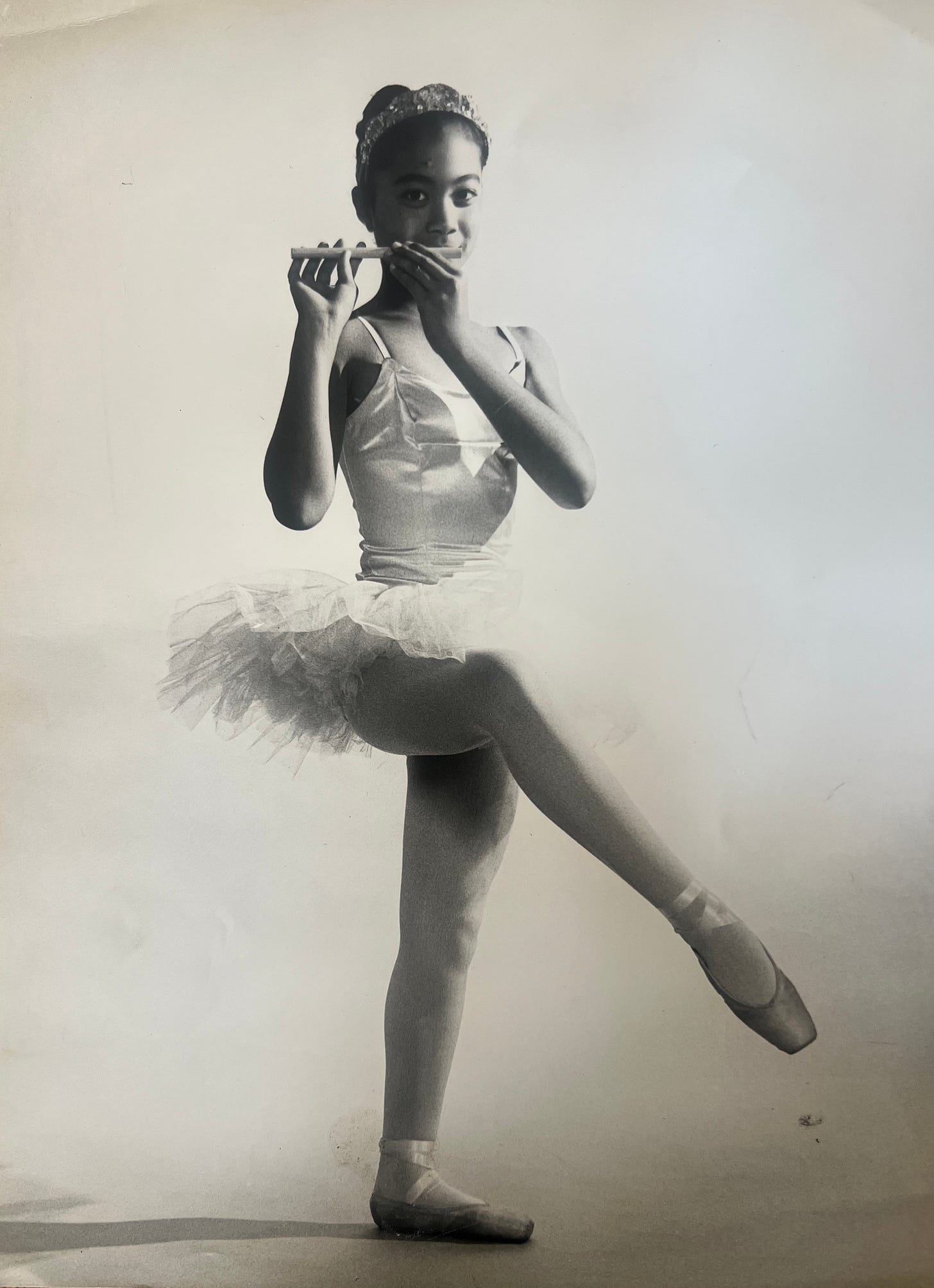
11-year-old Karah at her childhood studio, Ballet Capriole, for the annual school recital. Photographer unknown.
mk
That’s what you grew up thinking dance was, which is amazing.
ka
I had all these crazy opportunities and these amazing people I would think of as mentors now and leaders in ballet who directed me: there was Marion Chaeff, who had Ballet San Jose, and resident choreographer Audrey King from South Africa. As a regional dance opportunity, I worked with them on weekends. Learning that aspect of discipline and desire and devotion—I was just there from morning until night. What I loved about that is you’re just in the studio, you’re with the guest choreographer, you’re managing the sound for them just because you want to be in the space. You’re watching those that you love and respect, the elders in there, watching what it is they’re doing, how they’re rehearsing, just taking in all of this information of, ‘oh, what is the expectation of me, and what do I value in the room, and what do I not?’
mk
I do think that watching is kind of missing now, because it was that way for me as well growing up dancing: I have a photo of me and my best friend in ballet school sitting in the doorway of the studio, in awe of watching the company rehearse. And I feel like that’s definitely something that’s really different now. I think the access is different, but I also think there’s less awe-ness.
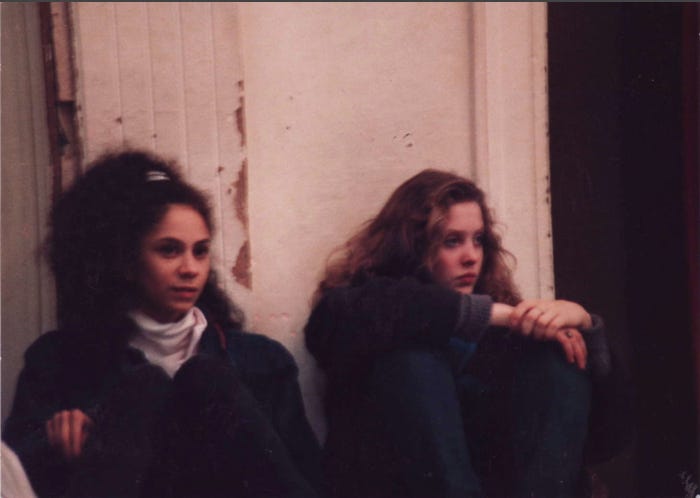
Maurya Kerr (left) and Dodi Axelson watching a Pacific Northwest Ballet rehearsal circa 1987.
ka
Yeah, and curiosity in that way. I watch you, and many others of our ilk, come into the studio and watch Alonzo teach to this day, because it’s somebody that has information…
mk
Yes, absolutely, I watch all the time because I love it; there’s so much to glean.
ka
I think that’s what I miss the most. Even when I first started as the director of the Training Program at LINES, I couldn’t get enough of being in the studio.
So, fast forward. When I went to LMU, Judy Scalin, the Dean, basically swooped me up, and I fell in love with dance again. LMU is also where I first worked with Donald McKayle, who was responsible for the start of my career. He saw my potential and liked the way I worked. He suggested I go to the American Dance Festival (ADF) that summer, an unforgettable experience! There, he encouraged me to audition for this Black dance company, Cleo Parker Robinson Dance Ensemble, and that was the start of my professional career.
mk
And you were just out of college. So you were what, 21, 22?
ka
Yeah.
mk
And how long were you with Cleo?
ka
I was with them for four years, maybe five, because then I tore my ACL. Because my nature is soulfulness, I think my attraction to Black dance was because it was a way of expression connected to the soul.
mk
I also imagine, and we’ve talked about this before, that because your upbringing was mainly Filipino, but you’re also Black, it was a way to connect with this other part of who you are that wasn’t as amplified growing up.
ka
Yes, not at all. I mean, like, literally, not at all. It wasn’t until I got to Cleo’s and started learning more about my Black heritage that people joked about my great, great-grandmother, Elizabeth Jackson, running through my veins. When I would dance, I was just screaming through my body!
mk
Exuding spirit, yes!
So after Cleo…
ka
I went home to have my ACL replaced, then moved to New York. Some of the artists I worked with in New York were Nathan Trice, Earl Mosley, Diane McIntyre, Germaul Barnes, Roger Jeffrey, Camille A. Brown, Hope Boykin, Obediah Wright, and Leonides Arpon. I was a part of Deeply Rooted with Kevin Iega Jeff in Chicago, doing every season for years. All connected.
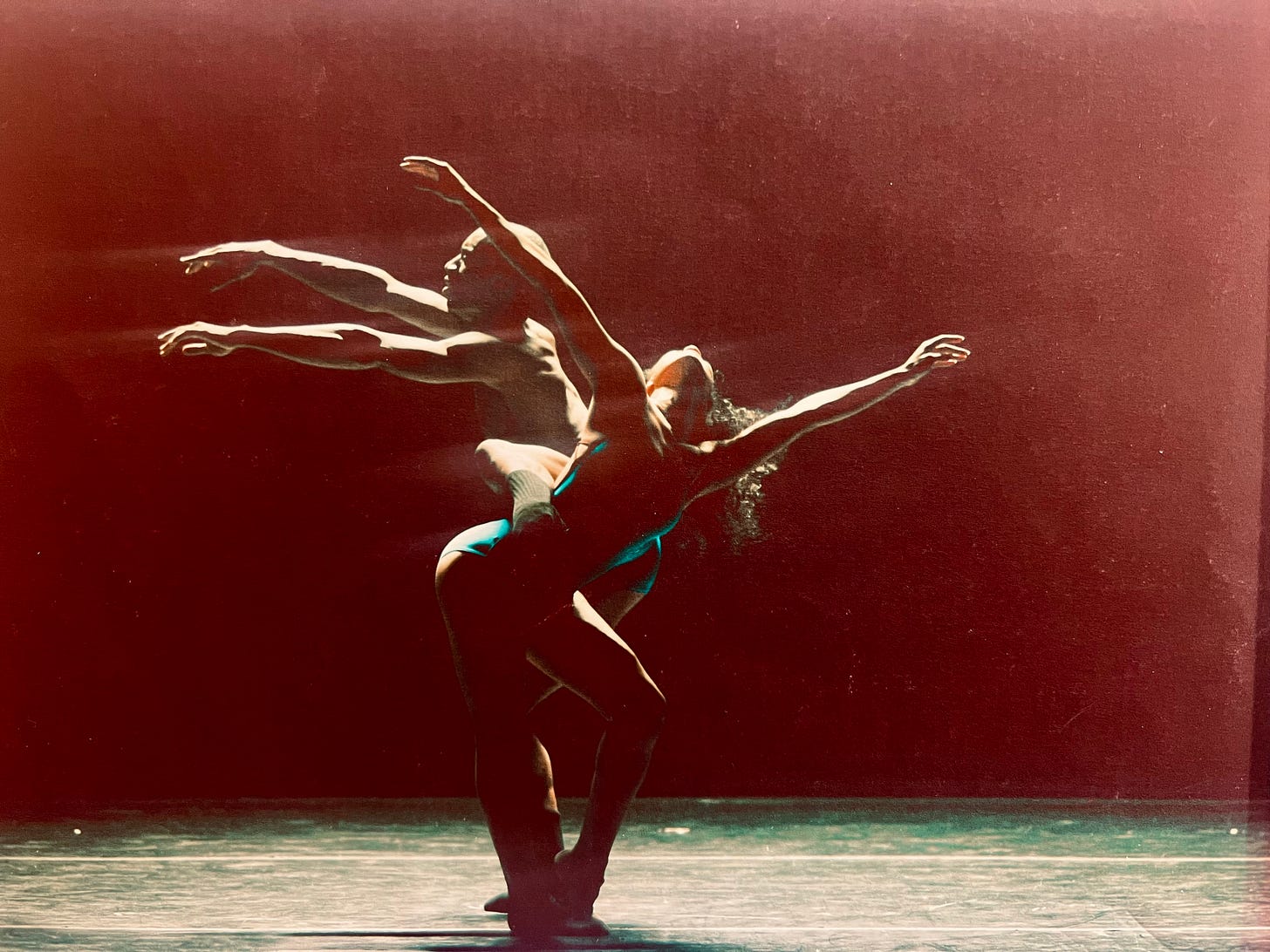
Karah performing Hissy Fits (choreography by Dwight Rhoden) with Complexions in 2007 with Desmond Richardson. Photo by Rosalie O’Connor
mk
Black, Black, Black, Black, Black!
ka
Crazy, right?! both laughing.
And it wasn’t even a conscious thing. It’s the community I knew. I liked how the movement made me feel, how their minds were working. And then, even later, with Complexions, I was drawn to the original idea—Complexions: A Concept in Dance—because they had the rainbow of everything, of bodies, of colors, of style. I thought that was extraordinary.
mk
Did you start teaching while you were dancing?
ka
Yes. I loved teaching when I could, and it was mostly when on tour. I was also invited to guest teach a lot. I had a unique experience being asked to take on a full-time teaching position at the University of Missouri-Kansas City (UMKC) to replace a tenure-tracked professor for a year, and I loved it! Just being on the other side of an academic situation, being able to utilize my college education structurally, plus all of my years of experience. It was after that that I joined Complexions. While teaching at UMKC, I was dancing for a company based there called Wylliams Henry Dance Theater. Dwight Rhoden came out to create a work, and he was pretty awesome. Basically, he said that when I returned to New York, there would be a place for me.
mk
That’s amazing. I think, too, that the connectivity, the connective tissue you’re talking about feels like it was more vibrant then.
ka
Yes, very much so.
mk
I mean, there’s still word of mouth and all that happening, but it seems that, and it might just be within the Black dance communities you’re referring to… a fibrous, nourishing connectivity feels very loud in how you’re talking about your history. It’s beautiful.
ka
I feel like I have a unique understanding of what success is. I’m telling you a sliver of my dance history, and I wouldn’t trade almost anything, right? I wouldn’t trade it because I’ve seen the world, I’ve met the most incredible people, and feel like I have a broader scope or lens of understanding what’s needed. And that’s what I do well: I fill in spaces with what I see is missing or could be enhanced.
But yeah, the connectivity was very vibrant and very fun.
mk
It sounds fun! And sort of like tides, that, if you had the kind of talent that you had, could easily carry you to the next situation, which is really beautiful.
ka
It’s hard to express when people haven’t really had that experience yet, and I’m talking about our students, but how important networking is. Networking isn’t schmoozing, it’s just developing these relationships that actually deepen and become richer and provide ongoing experiences.
mk
Like we all know each other. And I think that students sometimes don’t realize that.
ka
Exactly.
mk
You mentioned how Donald McKayle said, ‘I like how you work.’ And so again, coming to this endless conversation we have as educators around work ethic and how that is the thing people talk about. I can recommend such-and-such student because of how they work—obviously talented—but their work ethic is why I’m willing to stand behind them and say, ‘Yes, you should hire this person.’
ka
Exactly.
mk
We both think work ethic is such a beautiful thing, and it is basically the key to unlock every door. And we all talk, all the adults talk!
ka
Yeah. We all talk. And the world is small, you know.
mk
Yes, the world is small. I mean, the world is big, but it’s also very, very small. So I think that it’s important to—as students or just people in life—just to fall in love with the effort of what it is, that that itself is actually kind of the point. And that will prepare you.
ka
Absolutely, because it prepares you to navigate many different scenarios of what comes next, because you still have something you know to be true.
mk
I just read this great saying: if you’re not sure what to go for or which path to take, just go on the path of being your best self.
ka
I like that.
mk
It’s so smart. Like, just be your best. Just work your hardest, do your best, and then the path will become clear. And I thought that was such good advice, especially for those of us who are often asked, ‘What should I do?’ Just be your best.
So let’s transition to how you ended up back in the Bay, where I first met you, which was, what…
ka
2009.
mk
2009… that is crazy. So I’ve known you for 17 years.
ka
Oh my God.
So I was living in New York and dancing with the Complexions at the time, approaching my 40th birthday…
mk
Amazing that you were still dancing, wow.
ka
New York was the best place to be in my 20s and 30s, because of the vibrancy that you’re talking about and the grit, and as an artist, there’s nothing better to feel that kind of… it’s enlivening and depressing, the struggle. And that was the thing—here I am dancing with Complexions. We’re touring the world and doing all these great things with beautiful artists, but I’m still struggling. And my family’s on the West Coast, my parents are getting older, I’m having nieces and nephews who I’m not seeing grow up, and so I just kind of said, okay, 40, that’s the time. I’m gonna move back, and I’ll not necessarily be at my highest point, but to leave the dance scene on a high note.
mk
Leave before anyone wants you to leave.
ka
So that’s what I did. And having a network was key, because I’d never danced in San Francisco, and I didn’t know anyone or anything, but the connections happened. Layla [Amis] was actually directing the Summer Program and Training Program at LINES, and I knew her from Deeply Rooted. I reached out, told her I was moving out there and asked if there were any classes to teach. So that’s how it happened. I started teaching regularly, and soon Layla announced she was moving on, and she wanted to stay in-house before going out-of-house for the new director. And I think you knew this, but it was Christian [Burns] and myself that she was considering.
mk
I vaguely remember this, but I don’t remember you teaching before becoming the director.
ka
Because it happened really quickly—I moved back at the end of 2008 and stayed with my parents. I started subbing, that became a regular situation come the new year 2009, and by fall 2009, I was the director.
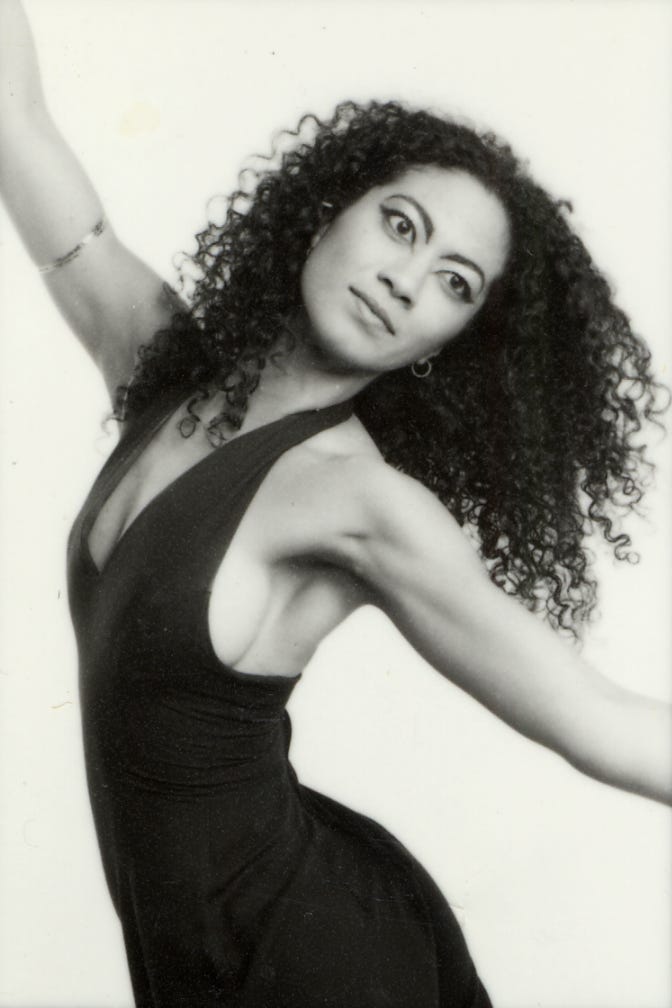
Photo of Karah at the International Dance Seminar in Brasilia. Photo by Carlos Terrana
mk
Yes, I remember you were the director in fall 2009.
ka
I didn’t want to do it. I mean, I’ve never had to be responsible for anybody except myself. Layla convinced me, and from that moment on my mindset has always been inclusion. Like, period. And it has always been about work ethic, honing in on learning, not being pigeon-holed in one box. There is such a niche for LINES in terms of the company, how do you expand it? Marina [Hotchkiss, director of the LINES BFA Program at Dominican University] and I worked together for a long time figuring out how to truly make it about the approach and the philosophy. Our programs weren’t feeders into the company; it’s not a style. So how do you bring together the concepts and ideas, the approach and the philosophy of the beauty that stemmed from Alonzo and trickled down through all of you [former LINES company members] who now teach? When you really look at it, like any artist who has integrity in their work or that devotion or work ethic—they all speak the same language. It might be different words, but their understanding is the same. And so that was my obsession, too. Bring it all in.
mk
I know you started bringing international artists in to teach the Training Program.
ka
Yes. Artists came from Spain, Germany, France, Brazil, Canada, China. And Blackness, yes. Blackness, especially in the beginning. Because of Alonzo, I had all these ideas in my head about what I thought should happen, and bringing colorfulness and outside influences was big. So that’s what I did. I brought in Uri Sands, Sidra Bell, Nathan Trice, Kevin Iega Jeff, Roderick George… I just kept bringing in all of these people.
mk
Bringing in the Blackness.
ka
Mm, hmm. And then also trying to not minimize LINES, that was huge for me.
mk
It’s not a binary, not one or the other.
ka
No. Like really bringing LINES rep really into the fold, instead of having a workshop here or there.
mk
And then LINES rep really became constitutional for the students’ experience.
ka
Yes. And there aren’t a lot of people who have that language that Alonzo creates, but it’s also that process and that work that you all [the faculty] provide for them.
mk
So, it’s funny to hear you say earlier that you had only taken care of yourself because you’re such a maternal presence, like Mama Karah, right?! You’re even maternal with me, and we’re the same age!
ka
laughing
mk
In my mind that’s just the way you’ve always been.
ka
Yeah. I think that I’ve always been that way with people who are in my life. I have always been that person, but it was within the scope of me still doing my thing. But yes, Mother Earth force.
mk
That’s a very unique quality that you bring as an educator and as the leader of educational programs. I feel like students feel very nurtured by you and seen in a way that differs from a lot of other programs. But I think that’s also intrinsic to LINES: that sense of cultivating the personal. I feel like your Mother Earth-ness takes it further in a way that has been really impactful for students under your care.
ka
Thank you for saying that. I’ve recognized that this is one of my strengths in a position like this. And it’s nice, because it’s natural, not forced. I feel like I can be honest with the students and still be nurturing, but provide tough love, but sometimes wonder if I could toughen up. laughs
mk
Yeah, but I also think that my honesty isn’t nurturing. laughs. You know what I mean?
ka
It is nurturing, but it’s pointed. Yeah, that’s your personality.
mk
But it doesn’t come out in the same way; as you said, yours is natural. I mean, you could go a little harder on the tough love sometimes! But that’s why we’re a community with these students.
ka
Yes, this is true.
mk
So The Training Ground just finished its first semester.
ka
Yes!
mk
Congratulations!
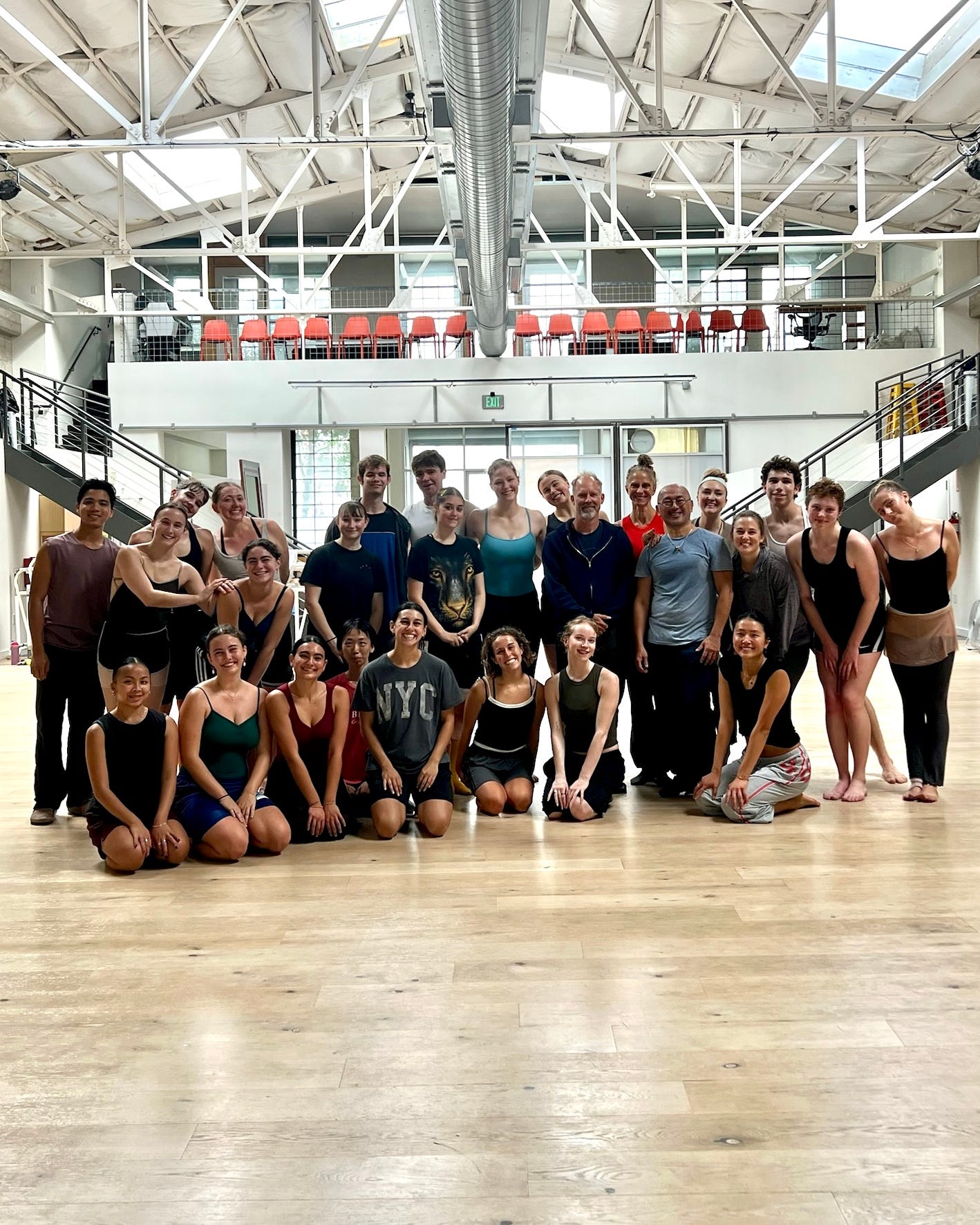
LeeWei Chao showered ttgsf with his amazingness and taught ballet class for current students, LBTP alumni, and many faculty and friends. Photo by Karah Abiog
ka
Thank you.
mk
Heading into second semester… what are you excited about?
ka
I’m excited about how supportive everybody has been. And that the students are super happy with what’s happening.
mk
Yes, they are.
ka
There’s integrity in wanting to continue on with the level of training, with the responsibility of bringing these young artists into the bridging of what’s to come next. And creating something that’s new, fresh, and vibrant in our community. I’m excited to build that even further. I guess I was nervous going into this whole endeavor knowing that while these last 15 years of the LINES Training Program have really been a cultivation of quality work, curiosity, discovery, community, all of these wonderful things, it was all under the auspices of LINES. So, I was nervous about starting The Training Ground SF as its own thing. It doesn’t need Alonzo’s name. And it’s not about me. It doesn’t really need my name. But if I can build this thing, which is of quality and integrity and about our community, then that’s golden. This is ttgsf’s pilot year, and that’s what I’ve been most excited about: seeing the response. And we, as family, as a team, or whatever, can actually create something that’s pretty awesome.
mk
Yes, and pretty much every one of the core faculty for The Training Ground is deeply infused with Alonzo.
ka
100%.
mk
Like we are, I am, because of Alonzo. I teach the way I do because of Alonzo. So, it’s basically like you grew up and moved out, but the philosophy is deeply embedded in everything that you’re doing. And, obviously, wherever I go, I bring Alonzo’s philosophies, which have also, in turn, transformed to become my own. You’re not under the auspices anymore, but you’re still very much living and breathing what we’ve all learned from Alonzo, so I think that that’s such a beautiful thing. Yes, the organism can survive.
ka
100%, but it’s also so much bigger than that. That’s what the intention of all this was about in the first place. It stemmed from the moment we learned the Training Program was going on an indefinite hiatus, a feeling of…
mk
…we can’t let this die.
ka
Yes. And it’s cool that the students basically expressed, ‘We want to continue this training.’
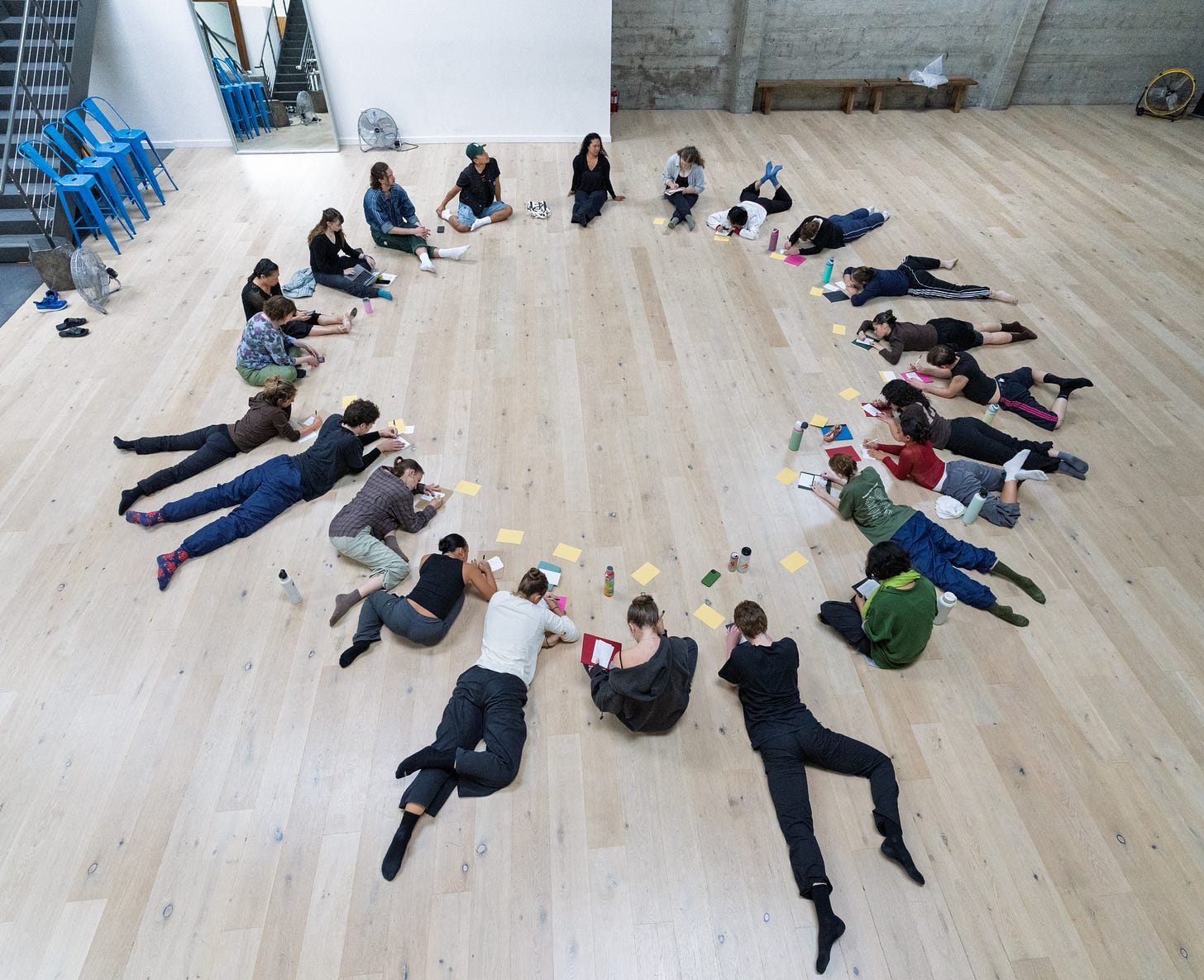
The first day of ttgsf, in its new home at City Dance Studios, with the inaugural cohort of students, faculty, and staff. The year always starts in a circle with introductions and writing down goals and intentions. Photo by Steve Disenhof
mk
I want to give a shout out to the students for their bravery in coming along for the ride, not knowing what was going to happen, but believing in the training enough to be like, ‘Okay, we’re coming.’
ka
The trust; wasn’t that amazing? And that’s another exciting, telling thing. The philosophy and the life of it should exist, need to exist.
mk
So, there’sThe Training Ground, there’sTraining Roots, and workshops are happening. Can you talk a little bit about the inaugural summer programming for The Training Ground?
ka
We’ve come up with this summer programming calledThe Hatchery, which will be a series of incubations. The thought is to devote an isolated period of time to various artists, mostly artists in collaboration, to the ideas and concepts that these artists are bringing, and explore together with dancers who want to dive deeper into the process. The idea of incubation is to really saturate them during these short stints and then have them emerge at the end with some nugget of growth.
mk
Six one-week incubation periods sounds really exciting. And a new model for summer programming, which I’m excited to participate in. You are obviously deeply invested in education; it’s been your life’s work for the last 15+ years. So ttgsf is just a new avenue for you to keep exploring how to be most impactful. What are your hopes for what this program can do?
ka
My hopes are that providing this type of home or platform for high-caliber training and attracting this level and demographic of dancer will draw people to the city. It’s also a way of providing work, not only for teaching artists or emerging choreographers, but where there’s also an overlaying of networking that happens within the community. I want The Training Ground students to have exposure to what’s happening with the companies, artists, and choreographers in the city, and vice versa. I’d love for everyone to understand what they have at their fingertips: these amazing young dance artists in a city full of creatives and opportunities. There’s something yummy simmering and about to emerge. I feel it!